 English

© 2019 Suzhou Tianzhijiao Precision Machinery Co.,Ltd. All rights reserved. Site Map Designed by iwonder.cn
Valve seats operate under severe mechanical and thermal conditions. Repeated contact with the valve, high combustion temperatures, thermal cycling, and combustion-gas exposure can gradually cause wear and deformation. Once the seating surface deteriorates, sealing performance and heat transfer can also be affected.
For applications that require higher surface durability, plasma welding provides a practical way to improve the working surface of a valve seat before final machining. A wear-resistant alloy is deposited onto the seat area, and finish grinding then removes excess material and produces the required seating geometry.
The effectiveness of this approach depends not only on the deposited alloy, but also on how consistently it is applied and how well the welding and grinding processes are integrated.
The valve seat is subjected to repeated impact and sliding contact as the valve opens and closes. At the same time, it must withstand elevated temperatures and repeated thermal expansion and contraction.
These conditions can lead to surface wear, deformation, oxidation, and gradual changes in seat geometry. As the seating surface wears, the valve may no longer make the intended contact with the seat, which can affect sealing and heat transfer.
A suitable hardfacing material can provide greater resistance to these conditions. Instead of relying entirely on the properties of the original substrate, plasma welding allows a specialized alloy to be placed directly on the working surface.
During plasma welding, a concentrated plasma arc melts the filler material together with a controlled amount of the valve seat substrate. The molten material then solidifies to form a metallurgically bonded layer.
This creates an important distinction between plasma welding and a simple surface coating. The deposited material is fused to the substrate, providing a strong foundation for the subsequent machining and service loads.
The welding process must be carefully controlled to achieve the required deposit thickness and bonding quality. Heat input, travel speed, filler feed rate, and deposition pattern all influence the final layer.
Too much heat can increase substrate dilution, distortion, and the size of the heat-affected zone. Too little heat may result in inadequate fusion. The objective is to achieve reliable bonding while maintaining the intended characteristics of the deposited alloy.
Plasma welding does not normally produce the final valve seat geometry. Instead, the deposited material provides machining allowance for the next stage.
After welding, the seat is machined and finish-ground to establish the required dimensions, contact width, concentricity, angle, and surface finish.
This means the welding process must be planned around the final ground condition. The deposited layer needs to be thick enough that the grinding operation can remove surface irregularities without removing the functional wear-resistant material from the seating area.
Consistent deposition is therefore important. An uneven layer can create excessive machining variation, while a deposit that is too thin may leave insufficient wear-resistant material after grinding.
The performance of the finished seat is strongly influenced by the quality of the welded layer.
A controlled amount of substrate melting is necessary for metallurgical bonding, but excessive dilution can change the composition and properties of the deposited alloy. Heat input must also be managed to limit unnecessary distortion and thermal effects on the surrounding material.
At the same time, the deposited layer should be checked for problems such as cracking, porosity, lack of fusion, or significant variations in thickness. Some surface irregularities can be removed during machining, but deeper welding defects cannot simply be corrected by finish grinding.
For this reason, inspection and process control between welding and grinding are important parts of a reliable production process.
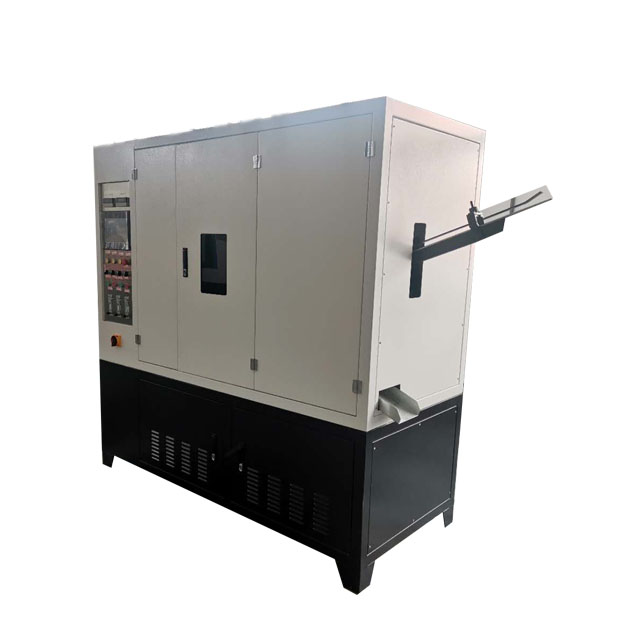
The main benefit of plasma welding is that it allows the valve seat to combine a suitable base material with a more durable working surface.
After finish grinding, the valve contacts the deposited alloy rather than relying solely on the original substrate. When the alloy and welding parameters are properly selected, the finished surface can provide improved resistance to wear and deformation under repeated valve contact.
This can help the seat maintain its intended geometry for longer, supporting consistent valve sealing throughout service.
However, longer service life does not come from hardness alone. The deposited material must be compatible with the operating conditions, and the welding process must produce a sound, consistent layer that can be accurately machined.
Plasma welding and finish grinding should be considered two connected stages of the same manufacturing process.
Plasma welding provides the durable surface material, while finish grinding establishes the precise working geometry.
A simplified process is:
Surface preparation → Plasma welding → Inspection → Rough machining → Finish grinding → Final inspection
Each stage affects the next. Poor surface preparation can affect weld quality, excessive heat can cause distortion or dilution, and an inconsistent deposit can complicate grinding. Conversely, accurate grinding ensures that the final seat has the correct contact geometry while retaining the intended wear-resistant layer.
Plasma welding can improve valve seat durability by depositing a wear-resistant alloy onto the working surface before final machining. The metallurgically bonded layer can provide better resistance to wear and deformation under the repeated mechanical and thermal loads experienced by valve seats.
The key is to control the entire process rather than treating welding and grinding as separate operations. Consistent deposition, controlled heat input, appropriate dilution, reliable bonding, and sufficient machining allowance all contribute to the quality of the final seat.
When the plasma welding process is designed together with finish grinding, manufacturers can achieve a valve seat that combines precise sealing geometry with a durable, wear-resistant surface, helping maintain performance over extended service.

Tianzhijiao specialied in engine valve grinding machine manufacturing and exporting, welcome to contact us for more machine details and quotation.

By continuing to use the site you agree to our privacy policy Terms and Conditions.